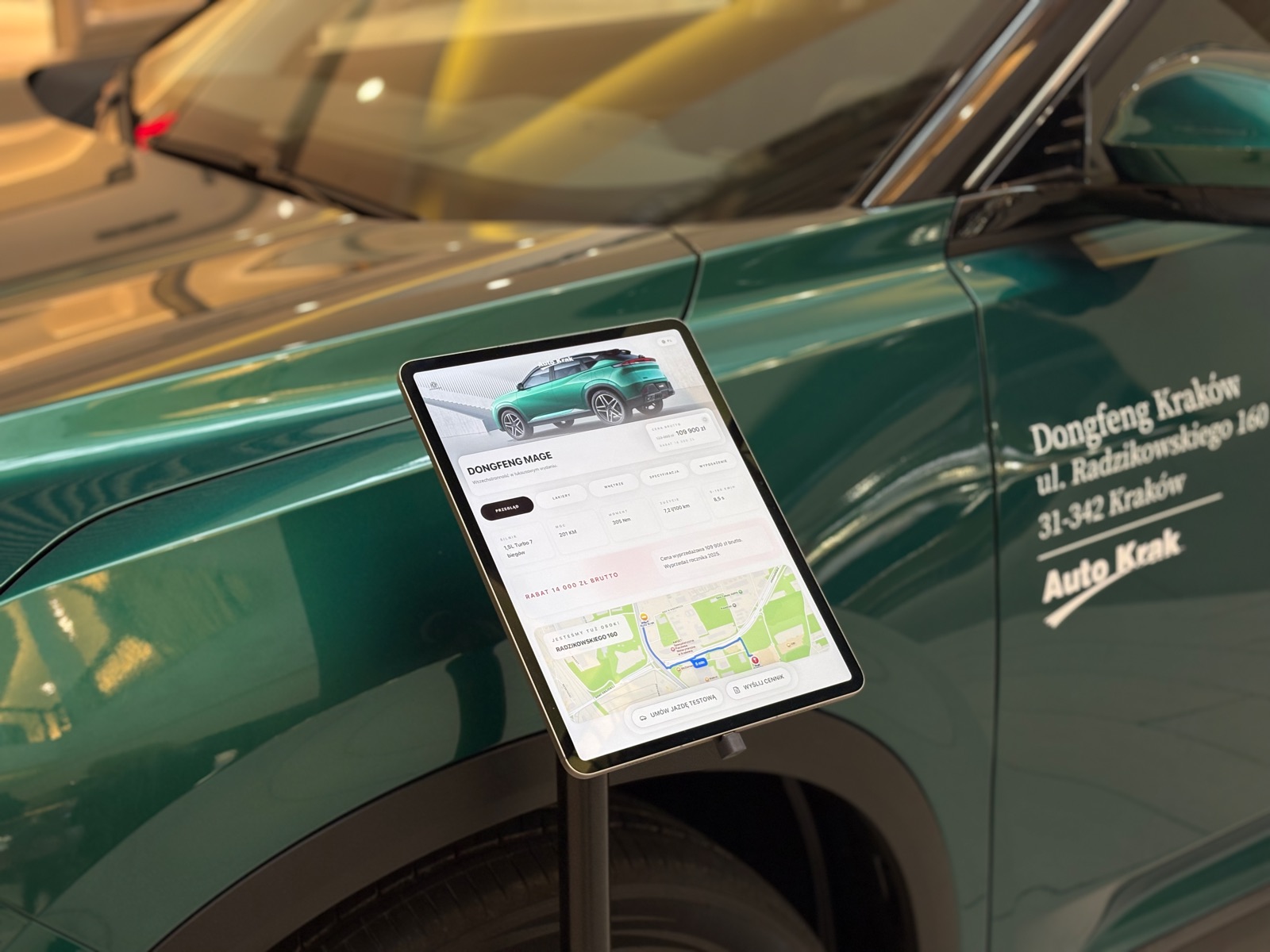
The first version of the SalesPad problem was visible without a dashboard.
A vehicle would be placed in a shopping centre with a paper specification stand beside it. People stopped, looked inside and sometimes discussed it. Once they walked away, almost all of that behavior disappeared. The dealership could not see what interested them, whether the display produced a contact request or how the location performed outside staffed hours.
We did not begin by trying to digitize the entire dealership. We focused on one loop: turn an unattended display into an interactive, measurable sales surface.
Four months later, SalesPad had its first paying customer.
The narrow loop made the first product possible.
The visitor needed to understand the offer, explore the vehicle and have a clear way to express interest. The dealer needed the resulting lead and enough behavioral context to understand what preceded it.
That defined the first system:
- a public kiosk experience beside the vehicle;
- campaign content tailored to the offer;
- lead capture with the required consent;
- session and interaction tracking;
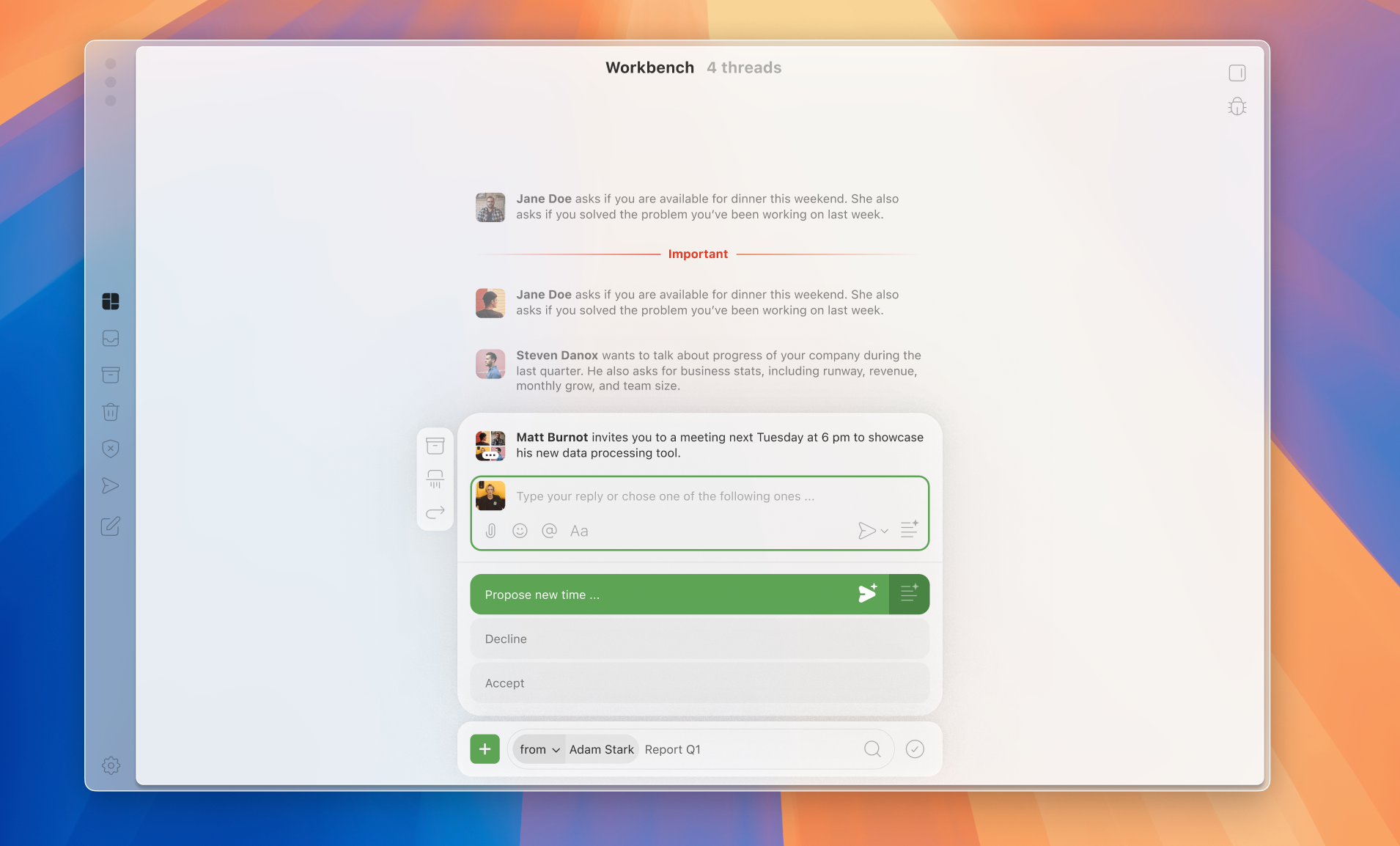
- a control plane for customers, campaigns and devices;
- a handoff into the dealership's existing workflow.
Everything else was secondary until that loop worked in a real location.
The architecture supported variation without making every customer a fork. Campaigns shipped as independent React applications. A central backend owned tenants, campaign assignments, device routing, sessions and leads. An iOS shell handled the tablet and loaded the experience assigned to it.
The technical boundaries mattered, but they were not what produced the first customer.
Customer conversations and implementation happened together.
In an early-stage B2B product, the founder does not finish discovery and then hand a specification to engineering. Each conversation changes what needs to be built, demonstrated or removed.
Dealership discussions forced us to translate a general analytics idea into an operational product. Where would the device stand? Who would provide the campaign content? What happened to a lead after submission? Which interactions were meaningful rather than merely easy to record? What did the dealership need to see before agreeing to a pilot?
The answers affected the interface, event model, deployment process and sales narrative at the same time.
Field testing exposed a different class of requirement. The product had to work on an unattended device in a public environment. A web application that behaved correctly on a developer's laptop was not enough. Device configuration, navigation, connectivity and recovery were part of the customer experience even though the visitor never saw them directly.
The fastest path was not to postpone those constraints. It was to encounter them while the product was still small.
The first contract changed the quality of the feedback.
A prospect can be enthusiastic without changing anything about their operation. A paying customer has made a different commitment.
The first paid rollout forced the complete system to work together: campaign, device, location, lead capture, analytics and dealership handoff. It also created evidence that could not be produced in a demo.
Across the rollout, SalesPad recorded more than 1,700 sessions and captured 76 leads. We could see how visitors moved through the experience and which actions preceded contact requests.
Those numbers did not prove that every dealership would buy. They proved that the product could operate in the intended environment, attract real interaction and generate measurable commercial outcomes.
That was the correct milestone for the first four months.
Speed came from owning the whole path, not only writing code quickly.
The product reached a paying customer because discovery, product decisions, engineering, deployment and sales were treated as one delivery problem.
If any one of those areas had been optimized independently, the pilot would have taken longer. A more complete platform without a customer would not have helped. A signed pilot without reliable device behavior would not have helped. More events without a clear dealer workflow would not have helped.
Founder-led delivery meant moving between these layers and deciding what was sufficient for the next real commitment.
It also meant accepting that some work which looked operational was product work. Preparing the campaign, configuring the tablet and checking the physical setup were necessary to learn whether the software created value where it was supposed to.
What the first customer did not prove.
Reaching revenue quickly is a useful signal, not the end of validation.
SalesPad proved that dealerships could pay, visitors would interact and the product could generate leads. It did not prove that hardware sourcing, installation, campaign preparation, field support and long dealership decision cycles could scale with the economics we wanted.
That distinction later became the reason to close the product.
The four-month result still matters. It showed that a small team could move from observation to a deployed, paid system without separating product thinking from technical execution.
The broader lesson is simple: for an early B2B product, define the smallest complete path to paid use. Then build every part of that path — including the inconvenient operational parts — before expanding the platform around it.